Denmark plans to raise its retirement age to 70 by 2040, making it the European country with the latest retirement age.
The measure aims to adapt the pension system to longer life expectancy. However, trade unions strongly oppose it.
Demographic aging puts serious pressure on labor markets and pension systems worldwide. To address this issue, most European countries have already raised the legal retirement age for their workers.
Denmark, however, has acted the fastest. Starting in 2040, Danish workers will have to wait until they are 70 to retire. With this reform, Denmark will have the highest retirement age in Europe.
The retirement age will gradually increase to 70. According to Danish media outlets, the Danish parliament approved a new law by a vote of 81-21 that will raise the retirement age from 67 to 70 by 2040.
The BBC reports that the process will be gradual, with the retirement age set at 68 by 2030, 69 by 2035, and finally reaching 70 by 2040.
More pensions for longer. In 2006, parties in the Danish parliament signed the Welfare Agreement, which linked the retirement age to the country’s life expectancy. This measure raised the retirement age in Denmark from 65 in 2004 to 67 in 2019.
However, last year, Social Democrat Prime Minister Mette Frederiksen said lawmakers should renegotiate the variable scaling of the retirement age to shorten the increase periods. Reducing these periods would better match the country’s current life expectancy. According to the OECD Better Life Index, Denmark’s average life expectancy is 82 years.
Is that too many years? Some Danish workers consider the new retirement age excessive. In an interview with Denmark Radio, Tommas Jensen, a roofer, said he had undergone knee, shoulder, and back surgery. “I just turned 47 and I can see that I have many years left in the job market. I may have to find a new profession,” he said according to an English translation provided by Google.
Jesper Ettrup Rasmussen, president of one of the country’s main trade union confederations, called the proposal “completely unfair.” “Denmark has a healthy economy and yet the EU’s highest retirement age. A higher retirement age means that [people will] lose the right to a dignified senior life,” he told the BBC.
Union leader Henning Overgaard echoed this sentiment, arguing that working until age 70 is unrealistic for those in physically demanding jobs. “Many of the politicians have gone to university. They can read reports and see statistics, but that doesn’t replace having been up at four in the morning with frost in their beard and a back crooked from yesterday’s shift,” Overgaard told local media outlet Netavisen Pio, according to an English translation provided by Google.
Europe retires between ages 65 and 67. Due to the aging European population, most countries have raised their workers’ retirement age to maintain pension system stability.
However, according to data from the Finnish Pension Center, most European countries have kept their retirement age between 65 and 67. The Danish parliament’s measure is the most ambitious in delaying the retirement of its workers.
In the U.S., people born between 1943 and 1954 can retire at 66. For those born between 1955 and 1959, the retirement age gradually increases to 66 years and 10 months. People born in 1960 or later must wait until age 67 to receive full benefits.
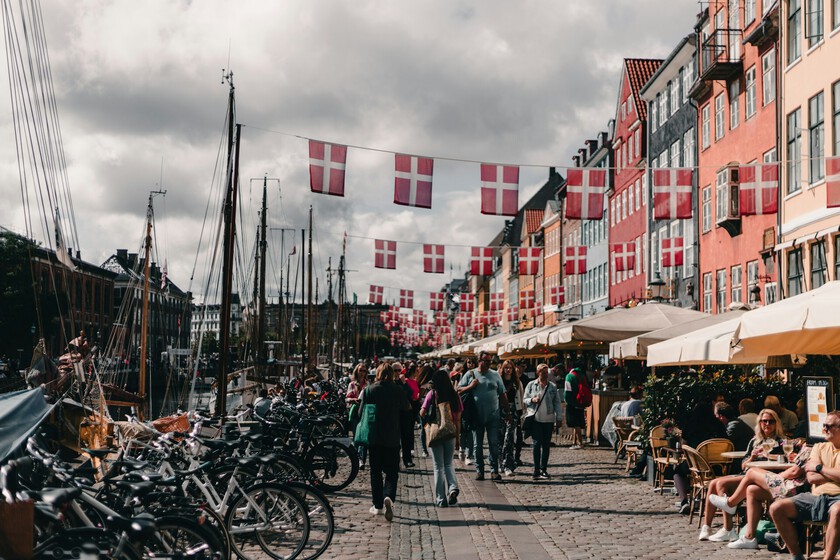
Image | Thomas Bergersen (Unsplash)
Related | Japan’s Aging Population Hits Rock Bottom: More Older Adults Are Choosing to Live in Prison
See all comments on https://www.xatakaon.com
SEE 0 Comment