
Adapted by:
Miguel Jorge
WriterJournalist. I've spent more than half of my life writing about technology, science, and culture. Before landing here, I worked at Telefónica, Prisa, Globus Comunicación, Hipertextual, and Gizmodo. I'm part of Webedia's cross-section team.

Karen Alfaro
WriterCommunications professional with a decade of experience as a copywriter, proofreader, and editor. As a travel and science journalist, I've collaborated with several print and digital outlets around the world. I'm passionate about culture, music, food, history, and innovative technologies.
This year marks the 50th anniversary of a historic moment. On April 4, 1975, two young men named Bill Gates and Paul Allen founded one of the world’s largest software empires: Microsoft. The fantastic thing after five decades is not that the company still exists, but that it remains so relevant. Here’s a story that sums up what Gates and Allen started and explains why they have so much money.
Digital eternity. According to the BBC, despite unstoppable technological advances, a surprising portion of the modern world still relies on computers powered by Microsoft operating systems released decades ago. From elevators in New York hospitals that use Windows XP to German trains that require technicians skilled in Windows 3.11 and MS-DOS, Microsoft’s legacy not only survives but remains deeply rooted in critical infrastructure.
In other words, although the company has invested heavily in AI as its new bet on the future, the present echoes its past, with machines that literally still boot up after 20 or 30 years. This phenomenon reveals the durability and stability of old systems and the enormous cost and complexity of replacing them, especially in sectors where functionality takes precedence over modernity.
The paradox of obsolete efficiency. Of course, there’s much more to it than that. Changing operating systems isn’t as simple as clicking “upgrade” for ATMs, industrial printers, subway trains, and hospital systems. The process requires rewriting proprietary software, upgrading specialized hardware and complying with security and compatibility regulations. As a result, many institutions still rely on technologies that Microsoft has officially abandoned, such as Windows NT or Windows 2000.
Even the U.S. Department of Veterans Affairs manages medical records on a digital architecture born in 1985, with textual interfaces that require capitalized commands and full file paths. This persistence reflects a combination of institutional inertia and business strategy. Gates and Allen had “visionary” business thinking: Let users keep using existing hardware while selling them licenses, rather than forcing obsolescence. That’s unlike Apple, which promoted total renewal.
The invisible trap. The human cost of maintaining these systems is also tangible. The BBC illustrated this with stories of professionals like psychiatrist Eric Zabriskie, whose days are dominated by machines that take 15 minutes to start up, and artisans like Scott Carlson, who rely on CNC machines that only work with Windows XP despite frequent failures.
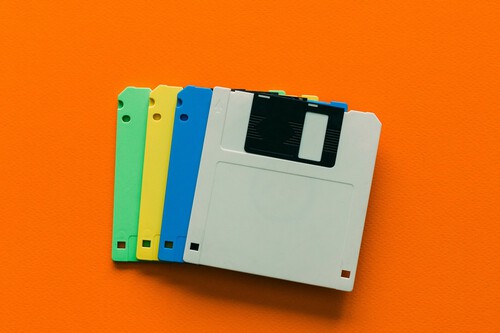
This situation creates a dependency in which systems continue to exist not out of nostalgia but necessity. The most worrying part for many is the structural fragility: Critical infrastructures rely on technologies with no technical support, no available developers, and no security patches against cyber threats. In some cases, such as the San Francisco rail network, each day begins with inserting a floppy disk to load a DOS system.
Yes, the image is anachronistic—but it’s real.
The archaeology of the present. Of course, not everyone views the situation with resignation. Some, like researcher Dene Grigar, approach the preservation of these systems as a form of art and cultural archiving. At Washington State University, Grigar runs an electronic literature lab where she operates 61 vintage computers from the 1970s to the early 2000s. These computers preserve pioneering digital works that depend on the original hardware and software to be experienced as conceived.
She believes modern emulators can’t capture the experience of interactive and participatory works that defined the beginnings of digital storytelling. Her collection includes everything from video games to Instagram zines, all maintained with almost museum-like care. The only thing she lacks, she says, is a machine that can read 5-inch floppy disks.
Empire of the immortal. The bottom line: The longevity of Windows systems is no accident. It’s deeply linked to a business philosophy focused on customer flexibility, allowing organizations of all sizes to keep using their old computers without forcing disruptive technological leaps. In this way, Windows has served both as a productivity tool and an invisible cloak of modern civilization.
It’s a paradox, too, since while Microsoft looks to the future with its commitment to AI, much of the world still lives within the ecosystem the company built decades ago. As developer M. Scott Ford told the BBC, “Microsoft is just something you get stuck with.”
The longevity of its past systems stands as a testament to Microsoft’s dominance and business model, one built on allowing users to continue using older equipment while paying licensing fees. This strategy keeps the technological ghosts of the past alive decades later. It’s a sort of eternal Ctrl+Alt+Del that, as Virginia Tech professor Lee Vinsel put it, “In a way, Windows is the ultimate infrastructure. It’s why Bill Gates is so rich.”
Image | Behnam Norouzi (Unsplash)