
Adapted by:
Miguel Jorge
WriterJournalist. I've spent more than half of my life writing about technology, science, and culture. Before landing here, I worked at Telefónica, Prisa, Globus Comunicación, Hipertextual, and Gizmodo. I'm part of Webedia's cross-section team.

Alba Mora
WriterAn established tech journalist, I entered the world of consumer tech by chance in 2018. In my writing and translating career, I've also covered a diverse range of topics, including entertainment, travel, science, and the economy.
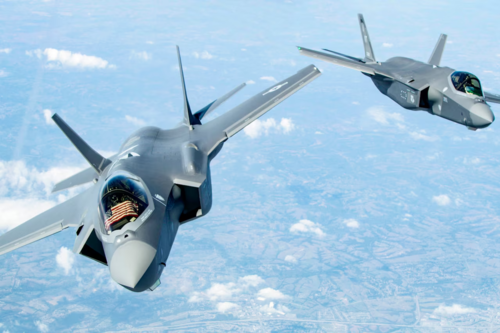
In March, the U.S. announced a significant strategic shift for Boeing’s struggling military division, awarding the company a contract for a new fighter jet called the F-47. This aircraft is designed to replace the F-22 and is intended to surpass its range. In short, anyone considering a challenge to the U.S. will need to fear the new fighter from now on.
However, what truly alarms China is a relic over 70 years old.
Nuclear threats, ranked. A study conducted by China’s Air Force Early Warning Academy of the People’s Liberation Army has identified the B-52 Stratofortress, a Cold War-era strategic bomber, as America’s top nuclear strike platform. Researchers ranked the B-52 above modern stealth fighters, such as the F-35A, and advanced stealth bombers like the B-2 Spirit.
The findings, published in the journal Modern Defence Technology, stemmed from simulations of a U.S. penetrating airborne operation targeting naval or ground assets in China as part of an airborne counterattack strategy. Contrary to expectations, the study concluded that the B-52H poses the biggest threat during deployment, penetration, and attack phases. Its advantage lies in its ability to carry up to four B61-12 tactical nuclear bombs and its ongoing upgrades in radar and electronic warfare capabilities.
Not totally outdated. The study also reveals that the B61-12 bombs, which have a power equivalent to 300 tons of TNT, are primarily designed for deterrence. However, they could also be used to neutralize critical nodes and access denial systems during a conflict. Despite the B-52H’s long service history, it remains effective against modern platforms due to its impressive payload capacity, operational range, and the robustness of its upgraded systems.
As a result, Chinese researchers conclude that in a limited nuclear strike scenario, this veteran bomber would provide a higher strategic value to Washington. Additionally, the report references a U.S. Congressional motion to restore the nuclear capability of around 30 B-52H units, underscoring its tactical importance in the current context.
Airborne deterrence. Researchers not only focused on identifying threats but also proposed effective countermeasures. These include enhancing surveillance, interdiction, and air defense capabilities along strategic routes. They emphasized the need for improved military intelligence to differentiate between conventional and nuclear airstrikes, considering the dual nature of many U.S. platforms.
In facing advanced stealth fighters like the F-35A or bombers such as the B-2, researchers recommended the extensive use of electronic warfare and cyberattacks to disrupt navigation and communications. They also created a prioritized list of targets based on their perceived threat level. The E-3 Sentry early warning aircraft was deemed essential in conventional scenarios. In contrast, aircraft like the C-17 and the B-1B strategic bomber were classified as lower threats due to their limited roles and obsolete systems.

Tactical precision. The Chinese analysis also noted that it avoided using predictive models based on AI due to “black box” concerns. Instead, the team opted for methods grounded in game theory and human judgment, supported by objective data. The threat assessment was developed using sensitive technical information related to U.S. and Chinese military systems, although the specific sources remain unspecified.
For instance, the study notes that stealth aircraft, such as the B-2 and F-22, have radar cross-sections of only 1 square foot, which theoretically allows them to be detected by Chinese radars at a distance of 250 miles. This technical detail is framed within the context of China’s rapid development of hypersonic anti-aircraft missiles, capable of intercepting targets more than 600 miles away. It reflects Beijing’s strategy of regional denial, particularly in sensitive areas like Taiwan and the South China Sea.
Nuclear threats and Taiwan. The recent report seems purposefully commissioned, rather than created for mere discussion. In a recent essay, former Under Secretary of Defense James Anderson warned that any future crisis involving Taiwan will likely include nuclear threats from China. This means the Asian nation could use them, whether implicitly or explicitly, despite its official “no-first-use” nuclear policy.
Within this context, and amid increasing tensions and advancements in bilateral technology, recognizing the B-52 bomber as a top nuclear threat reshapes strategic perceptions regarding the military balance between great powers. More importantly, it emphasizes that, in an era dominated by drones (as seen in Ukraine) and cyber warfare, a 20th-century force can still represent a significant risk of apocalyptic consequences today.
