
Adapted by:
Alejandro Alcolea
WriterWriter at Xataka. I studied education and music, but since 2014 I've been writing about my passion: video games and technology. I specialize in product analysis, photography, and video. My body is 70% coffee.

Alba Mora
WriterAn established tech journalist, I entered the world of consumer tech by chance in 2018. In my writing and translating career, I've also covered a diverse range of topics, including entertainment, travel, science, and the economy.
When you think about the primary material used in boat construction, wood might be the first material that comes to mind. In the end, people have been sailing wooden ships for millennia and continue to do so. You might also think of steel, which dominated shipbuilding in the 19th and 20th centuries and is found in today’s massive vessels.
One material you may not have considered is concrete. Surprisingly, concrete ships have been built for about 150 years, and this was a logical innovation. The use of concrete in shipbuilding even extended to World War I and World War II.
A Frenchman. In the mid-19th century, French inventor Joseph-Louis Lambot had the revolutionary idea of constructing a reinforced concrete boat. However, there was one minor issue. At that time, in 1848, the concept of reinforced concrete hadn’t been invented yet.
Reinforced concrete is a combination of concrete and steel that offers significantly greater structural strength when paired. Since its invention, this material has been foundational for constructing impressive skyscrapers, dams, and several buildings over the last century.
Lambot is credited with the idea of combining concrete and steel. However, there’s ongoing debate regarding the exact dates of its invention, the patents for reinforced concrete, and who built the first slab. Despite this controversy, Lambot aimed to test his invention by constructing a small boat less than 13 feet long. He intended to showcase it at the Paris Universal Exposition of 1855.
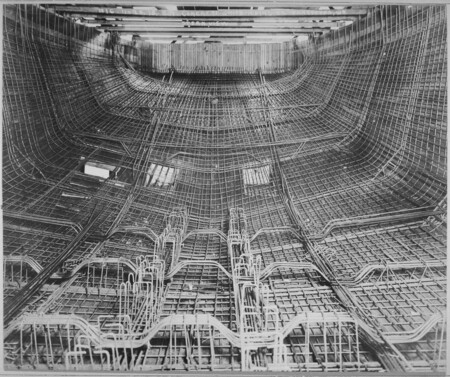
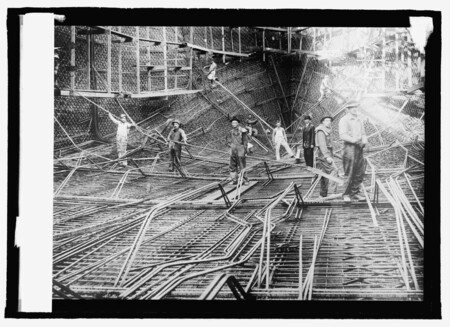
Advantages. Initially, the interior of these vessels was made of wire mesh covered with cement. Lambot’s idea was to replace wood with reinforced concrete. While the invention received some interest, it didn’t capture the attention of boat manufacturers. Only a few barges were constructed for European canals, and not much else came of it. Everything changed in 1896 when Italian engineer Carlo Gabellini built the Liguria, which is considered the first reinforced concrete boat designed for high seas navigation.
Using reinforced concrete for ships makes sense for several reasons. It’s highly resistant to corrosion. This means the marine environment doesn’t damage the hull, reducing maintenance needs and extending the ship’s lifespan. Additionally, the material offers good thermal insulation, allowing for better transportation conditions for perishable goods and eliminating fire risks.
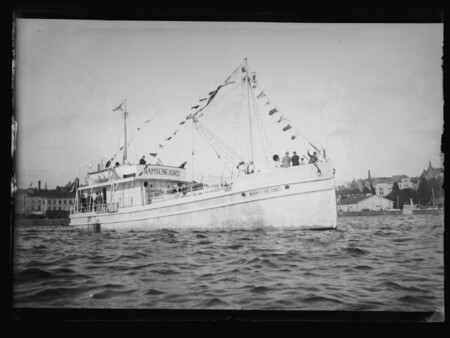 The Namsenfjord.
A new era. A few years later, the construction of concrete ships began to expand, with other countries starting to build them, particularly freighters. However, by 1914, the onset of World War I changed everything. The world was compelled to construct concrete ships due to a significant shortage of steel.
The militarization and industrialization of the warring nations led to this steel shortage. Ships were crucial. Naval supremacy has always played a vital role in conflict. However, the steel needed for destroyers could be used to produce many other crucial resources. Still, there was a pressing need to build ships to facilitate global resource movement.

World War I. The revolution in shipbuilding came with the Namsenfjord, a Norwegian concrete ship launched in 1917. Measuring 85 feet in length and weighing an impressive 400 tons, it demonstrated that constructing self-propelled concrete ships was possible.
The U.S. recognized the potential of these ships beyond their intended role as cargo vessels powered by an auxiliary engine. As such, the country established the Emergency Fleet Corporation program, aiming to produce 24 concrete ships. However, this initiative was largely unsuccessful. Completed ships were finished after the war and had to be repurposed for other uses.
One of these ships was the SS Faith, which was intended to serve during the war but was used for transport duties within the U.S. Launched in 1919, the 320-foot-long ship was in service until 1921, when it was sold to Cuba. A year after Faith, the U.S. launched the 423-foot-long SS Selma on the same day Germany signed the Treaty of Versailles, officially ending World War I. The SS Selma ultimately served as an oil tanker in the Gulf of Mexico.
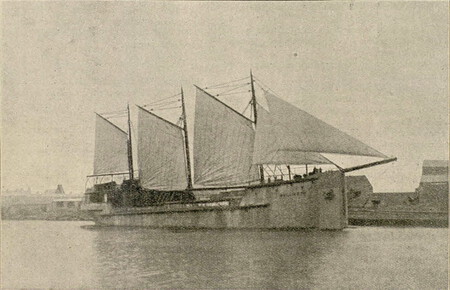 A concrete ship equipped with sails and a supplementary engine for added support.
Disadvantages. With the war coming to an end, interest in building concrete ships diminished. There were still advantages, such as the fact that constructing them was much cheaper than using steel or iron. However, their disadvantages far outweighed the benefits.
A concrete hull must be thicker to achieve the strength of a steel hull, leading to several limitations. First, this thicker hull results in increased weight, which also contributes to a deeper draft. As a result, the ship’s displacement is slower, requiring more fuel for operation. The additional thickness also means less interior space is available for cargo, reducing the usable volume.
The added weight necessitates more powerful engines and larger fuel tanks, increasing the investment required for these components. Moreover, the construction facilities needed to build concrete ships have to be much larger. The components can’t be welded together like steel ships. Additionally, concrete ships face challenges regarding impact resistance.
World War II. While metal can break, it also possesses greater elasticity than concrete. Conversely, concrete is more susceptible to impact, meaning that a collision can result in a crack in the hull. For a ship that weighs so much, this can lead to catastrophic consequences. This is why the concrete ship project was abandoned after World War I, with construction mostly limited to cargo barges.
However, as World War II approached, the earlier demands for steel resurged. Despite this, the U.S. program wasn’t as ambitious as the one launched two decades prior. Concrete ships were constructed, but their primary purpose was for logistical support, such as transporting materials, particularly during operations leading up to the Normandy landings.
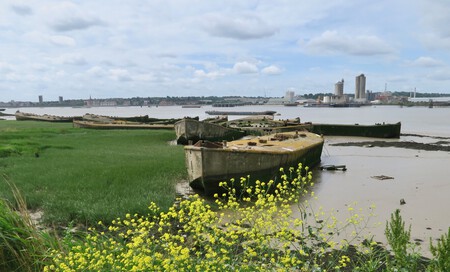
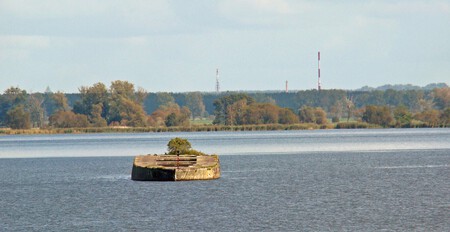
Second life. After World War II, many concrete ships passed into a state of disuse. Although there have been subsequent attempts to build reinforced concrete ships, they’ve never been regarded as a serious alternative to other materials that are much more suitable for this purpose.
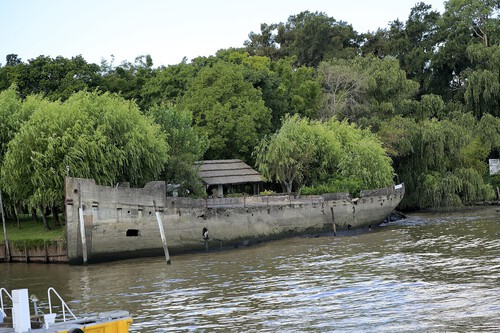
The ships constructed during that period often found a second life as breakwaters or harbor defenses, while some were simply abandoned, like those resting in the River Thames in London. Others, like the SS Quartz, were repurposed for atomic bomb tests, specifically during Operation Crossroads at Bikini Atoll.
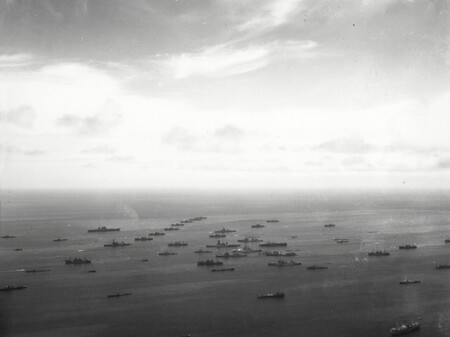 To test the effects of the nuclear bombs developed by the U.S. after World War II, bombs were dropped on military vessels that were no longer in use in the Pacific atolls.
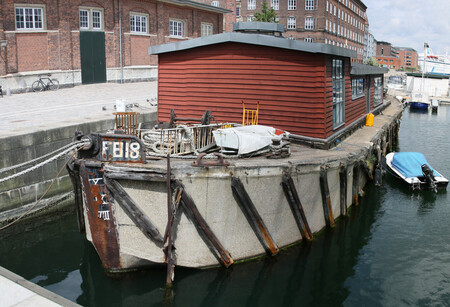
Notably, some still build concrete barges, particularly in the Netherlands. These structures are used as foundations for houseboats. Their concrete bases are protected with wooden or metal fenders to prevent damage from collisions during flooding.
While it may seem like a crazy idea to build a concrete ship for military use, especially during the steel shortages of World War I, it actually made a lot of sense at the time.
Images | Dornum72 | Carpkazu| HaveringLooper| Falk2| Mateusz War


