
Adapted by:
Javier Márquez
WriterI've been in media for over a decade, but I've been marveling at the possibilities that technology brings us much longer. I believe we live in a world where the digital revolution is changing everything and that Xataka is the best place to write about it.

Karen Alfaro
WriterCommunications professional with a decade of experience as a copywriter, proofreader, and editor. As a travel and science journalist, I've collaborated with several print and digital outlets around the world. I'm passionate about culture, music, food, history, and innovative technologies.
You have probably seen news stories in recent months about the end of support for Windows 10. If your computer runs on that operating system, consider when to upgrade to Windows 11 or find an alternative. Sticking with an operating system without technical support is often seen as reckless. With good reason: You lose security patches, compatibility with new applications, and protection against threats.
However, not everyone seems concerned about staying up to date. The most unexpected example comes from a critical and sensitive sector: air traffic control in the U.S. Some control towers still rely on technologies from another era—the last century.
Chris Rocheleau, acting administrator of the Federal Aviation Administration (FAA), confirmed this week in an appearance before the House Appropriations Committee that some control towers still use paper strips and floppy disks to coordinate flights. These technologies were introduced in the 1970s and are still in use today at some airports in the country.
NPR added fuel to the fire by claiming that some of these computers run Windows 95. While more modern than floppy disks, support for this system ended two decades ago. Microsoft stopped updating Windows 95 on December 31, 2001, and today offers no warranty or security support.

An Obsolete Technology, but Still Functional
Why are they still in use? Because they work—and have worked for decades. Air traffic control systems must remain operational 24/7, and their historical reliability is precisely why no one has wanted to replace them entirely. However, that margin is running out.
New Transportation Secretary Sean Duffy has signaled that modernizing the system is now a national priority. In his words, it’s the most important infrastructure project the country has had in decades. This statement echoes the growing concern within the industry. The call for sweeping reforms is growing louder, from air traffic controller unions to industry groups such as Modern Skies.
In March 2025, the Government Accountability Office published a report containing damning conclusions. Of the 138 systems that comprise the FAA’s infrastructure, the GAO classified 51 as unsustainable and 54 as potentially unsustainable. Many of these systems have been in service for over 30 years. Some for more than 60.
The report warns that these platforms are vulnerable not only to technical failures but also to increasing maintenance difficulty. Spare parts are no longer available, and technicians specializing in these systems are retiring. Temporary solutions like virtualization cannot always be applied in critical environments.
In light of this situation, the Department of Transportation launched an open call for private companies to submit proposals for next-generation technologies. In the meantime, the system continues to operate increasingly fragilely. Only time will tell if the leap to modern infrastructure will finally become a reality this time.
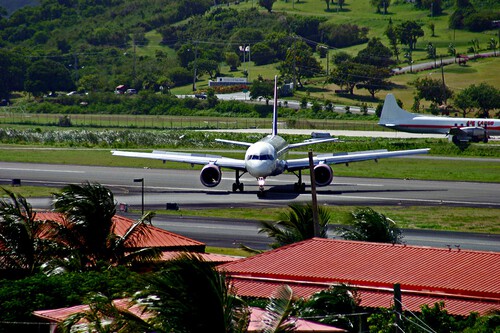
Image | Karl Callwood (Unsplash)
Related | Almost Everyone Has Stopped Using Windows XP. There’s One Surprising Exception: ATMs